

No, I don’t think this is high cinema, and yes, I know there’s no way Bruce Wayne could go through all those beatings and not end up breathing through a tube. Suspend your disbelief, comrades–principally that no one figured out who is behind the mask. It is silly, yes (Are they all so dim?) But it’s also serious: these movies are very popular.
In this review, I approach The Batman as a text. That is to say, I don’t have more interest in the performances, the cinematography, the visual and sound effects or score than the extent to which they inform the writing and narrative itself.1 Spoilers, obviously.
Superhero movies inform the discourse. The blokey ones, like this one, have a non-trivial influence on more than just the aesthetic of masculinity. I argue that The Batman is conscious of its influence in ways that superhero movies have heretofore tended to ignore. It doesn’t disregard its blockbuster prominence, but tries to do something with it.
Film criticism, especially in the Hollywood sphere, is global stuff. A movie this big and ensuing criticism is so far out there in trying to be for everyone that it ends up being about no one, except maybe a fictional American vigilante heir. If the someone is still a little silly, The Batman does succeed in being about something.
To start with, though, the absurd: in the final half hour of the film, Bruce Wayne gets the opportunity to display his unrestrainedly savage side; to save the female love-interest; and to sacrifice himself for Gotham (or try to). The tropes are as heterosexually familiar as the flag. He overcomes all adversity, without even a bullet wound to the arm. More on all this later.
To be clear, I think The Batman is a good movie. But for the fan service, it might have been the best Batman movie. Which you can’t say flippantly. Christopher Nolan’s The Dark Knight was spectacular for reasons other than Heath Ledger’s performance as the Joker. And it was also about more than just superheroes and villains.2 But it didn’t make subsequent installations of the hero franchise impossible (or simply unfortunate), as it did for the villain.
If this is for no other reason than that one of the biggest comic book characters in history has obvious staying power, then The Batman isn’t unconscious of its privileged position. As the story evolves, and it does so with engrossing mystery, it becomes not a story about a vengeful saviour, but one about those who have fallen through the cracks opened up in the system by the corrupt.
The superficially stoic, emotionally ensnarled Bruce Wayne is not only a compelling hero, but an effective thematic nexus too. We sense the precipitousness of his troubles early on: he monologues, “Two years of nights have turned me into a nocturnal animal… These nights all roll together in a rush, behind the mask. Sometimes in the morning, I have to force myself to remember everything that happened.” And he will go back, right back, to the story he has told himself of himself.
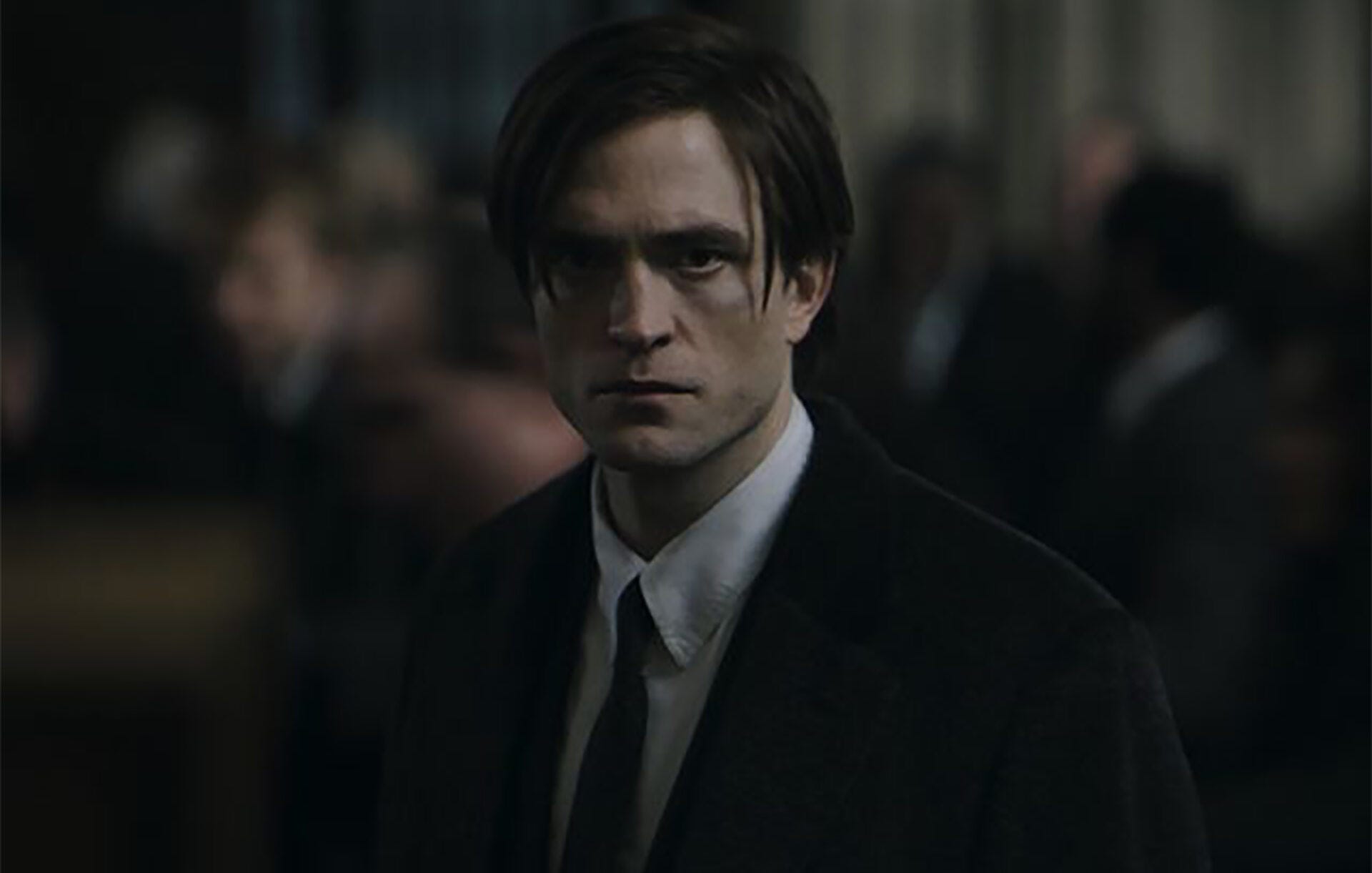
Like a heartbroken socialite, Wayne is clearly running from something. That he surmounts his fear of loss by the end of the film–moments like that with the hospitalised Alfred or declining to elope with Selina Kyle–exemplify his emotional growth and sense of responsibility. They are an opening up to the world that allow the protagonist to stand outside of himself and his traumas, and thus to react to it appropriately, rather than vengefully. Crucially, they treat the protagonist not as a supremely imperturbable genius alpha, but as a sad man with a hurt boy inside him.
That little piece of honesty would make The Batman worth watching by itself these days. But it isn’t the only thing going on. This was also more polemical in 2022, but the film’s most overt themes are corruption and inequality.3 Those two problems are the primary motives of (or antagonisms of the antagonist) the Riddler, which is what almost makes him an anti-hero. If he hadn’t been played by Paul Dano and didn’t murder his victims in such inventive ways, we’d almost feel drawn to him.
I mean, he’s got a point. The real villain isn’t him, it’s the shittyness of Gotham. Carmine Falcone is the gangsterly éminance grise behind all the crooked cops and politicians. He embodies corruption and abused power.4 Unfortunately for The Batman, John Turturro as Falcone just isn’t menacing enough. Perhaps it’s because of the Big Lebowski.
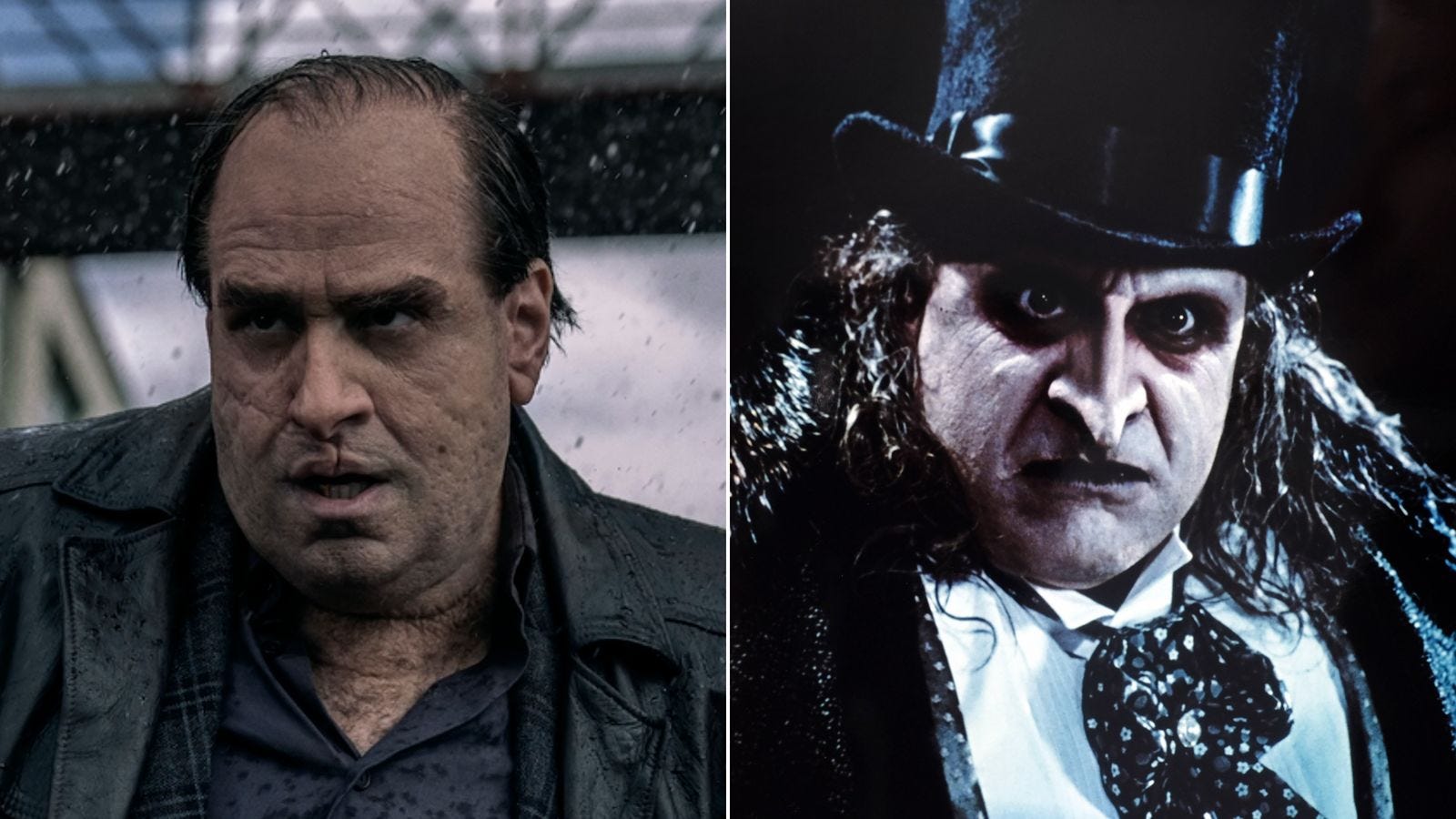
Then there is the Penguin. The fact that this character is actually a rather good-looking Irish man boggles the mind, and hats off to Ferrell. But we don’t quite loathe the clownishly uncomplicated, bwaston-accented gangster either. So the film has a gap, a villain-shaped gap that it needs to fill. And this is where the wheels start to come off…
Batman’s speech to the Riddler in prison about being a delusional lunatic is only half right. And he’s recruited, on Discord, a bunch of other lunatics to join him. But the Riddler isn’t delusional–he’s right, more or less. And that’s the tricky line that movies like this have to walk. The Joker (2019) misunderstood this and ended up accidentally dog-whistling incels. The only way the Riddler can do evil in a place like Gotham is by doing it accidentally.
In fact, the Riddler has been using the Batman to enact justice all along. Which is why the ending doesn’t fit: it’s too haphazard. What have the discord-losers joined the Riddler in doing, exactly? Shooting the mayoral candidate at her speech (why not literally anywhere else?), and then just shooting indiscriminately into the crowd? Resoundingly American, yes, but how does that advance the Riddler’s crusade against systemic wrongs?
Matt Reeves and Peter Craig, who wrote the script, had sensed that villain gap, I think. They’d written a smart movie about familiar problems that cause real suffering. But Batman can’t punch corruption in the face, can he? So the city floods (according to the Riddler’s inscrutable plan5) and the Batman fights the cronies and brutalises the man trying to kill his girlfriend, and so on.
I’m not complaining that we get what is probably a semi-accurate look at how conspiracy theories borne by begrudged onliners incubate.6 I am a little bummed out, though, that all those pulling the strings were cartoonish gangsters. Maybe Reeves and Craig should have written in, say, a media mogul from Australia. Or just the Koch brothers.
I know, I know: it’s just a movie. And it had fun action and a good score and a successful avenger. Right won out, and the cronies and the corrupt were all vanquished. Just a movie indeed.
MM.
I’m aware that the totality of interplay there is extensive, not to mention subtle.
The dichotomy of chaos and control; attendant horseshoe theory; surveillance and freedom; love. Too many themes, possibly. Also, I’ve started to find Nolan’s wealthy, blameless white guy right trope a little tiresome.
It is a footnote worth making that the shock value of a cabal of crooks running a city (or a country) is significantly diminished in 2025.
Almost like the pro-Russian Bidzina Ivanishvili in Georgia, or Netenyahu in the US. Sorry to get political in the footnotes, but it isn’t baby-eating Democrat elites.
Why flood the city at all? As some sort of symbolic blow to the Batman’s efforts? But the Riddler doesn’t have anything against the Batman, as he himself acknowledges. Or against normal people, who are the ones dying in the flooding.
The obvious and most alarming example being the mobs of January 6, 2022.